After the atomic bombing of Hiroshima 81 years ago on August 6, 1945, Einstein reflected “The release of atomic energy has not created a new problem. It has merely made more urgent the necessity of solving an existing one.” Though not a Christian, Einstein recognized that, while the spectacular destructive capacity of nuclear weapons was an entirely new phenomenon in 1945, man’s innate drives towards sinfulness and evil long predated WWII. And yet, even as humanity has not changed, the arrival of such powerful technology necessitates a corresponding effort by Christians to restrain the potential destruction. Hopefully, voices that are both Christian and realist can, working harmoniously with other faiths and worldviews, seek to guide the world safely through the current nuclear age.
Principle 1: The nuclear threat is here to stay and it must be managed. The existence of nuclear weapons makes nuclear war a possibility, but also safeguards against that possibility through mutually-assured destruction. Pacifist logic seeks global disarmament, even as the pre-nuclear world was far from peaceful. It was the very threat of a potential Nazi atomic bomb which prompted Einstein and other physicists to petition President Roosevelt to pre-empt that threat. From this historical example we can learn that even ardent pacifists like Einstein had to make pragmatic exceptions. Nukes cannot and should not be used, but the limited possession of them is a safeguard against rogue states. This may also discourage great powers from going to war directly with each other.
Principle 2: The highest public conscience is necessary. Pacifistic spirit is not irrelevant or misguided per se, but must be forced to reckon with certain facts. In our hearts, we all want peace. At least in the West, we instinctively recognize the innate desire of each man to sit under his own vine and fig tree and be unafraid. Yet there is also evil within each one of us, something which cautions that the abandonment of all weaponry would invite the unjust to embrace tyranny. Self-proclaimed realists are often in actuality pacifists at heart who regrettably recognize the unpleasant facts and corresponding duties. Bearing in mind that Christian love means working through reality rather than just wishing for a better world, it behooves us to be prudential rather than idealistic. In this act, it is hoped that a Christian voice can sing in unity with a chorus of all religions and philosophies wishing the same. The vital importance of this is captured with a single image: what moral conscience do you want governing the finger closest to the nuclear trigger?
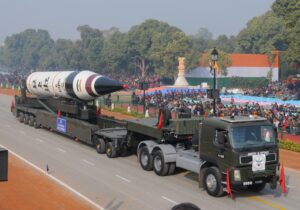
Principle 3: Nuclear non-proliferation. The Treaty on the Non-Proliferation of Nuclear Weapons (NPT), which entered into force in 1970, was a positive development, but not all nation-states are party to it. If there are fewer countries with nuclear weapons, this may reduce our risk. Four powers have gained nuclear weapons since the signing of the NPT: India, Pakistan, Israel, and North Korea. The current war with Iran is, of course, motivated in part by fear that a fifth member may join that group. Yet even among those who have signed the treaty, trust is far too low.
The temptation to violate this principle and join the ring of nuclear-armed powers is as rational as the argument for self-defense. Only the extreme pacifist might argue against that. Yet the very act of acquiring nuclear weapons also paints a target on one’s back. Any country with a nuke will be in the crosshairs of a rival country with a nuke, while all other countries without them will jockey for the position of protection under the nuclear umbrella of their allies. Nuclear weapons have not ended war, but they have limited aggression between the major military powers.
Principle 4: Responsible democratic government. This must be in part a product of the second principle above. If a government is neither democratic nor responsible, it is likely a tyranny under unwholesome moral leadership. Reinhold Niebuhr’s famous observation fits here: “Man’s capacity for justice makes democracy possible; but man’s inclination to injustice makes democracy necessary.” Without a democratic government answerable to its people, who alone give true voice to the public conscience, we hazard a much higher risk of nuclear war. Indeed, reflecting on the madness and war of our past, the most responsible and democratic order is a prerequisite for a safe and tranquil future.
Principle 5: A greater harmony, a “Global Ethic.” Trust is low between the United States, Russia, and China, representing some of the major signatories of the non-proliferation treaty. Religious and ideological divisions still abound in the world: Christian vs. Muslim, Communist vs. Capitalist, Ukrainian vs. Russian, Chinese vs. American, Israeli vs. Palestinian, Sunni vs. Shia, democracy vs. autocracy. This list goes on as the schisms of insecurity abound. There is a need for some global sense of ethics and responsibility binding us together—a spirit of common cause and justice that transcends the United Nations. That we should beat our swords into plowshares has long been an unattainable goal for humanity.
Can a global nuclear ethic ever be realized? Not likely in totality. Yet this does not absolve each and every nation from finding common cause in minimizing the risks of nuclear war. The foundations of nation-states—shared language, culture, religion, and history—have never been scalable to all mankind. Yet internationally, with division and perils abounding, we must surmount these differences insofar as possible.
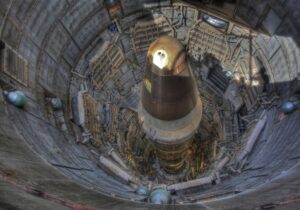
Principle 6: Strategic limits and reductions. The total number of nuclear warheads in existence is of course a concern. With just enough warheads to deter a nuclear attack, it seems pointless to stockpile weapons that only serve to increase budgets. In this sense, it is necessary to reinvigorate an international discussion about how many warheads are needed for minimal deterrence. What kinds of arsenals are the safest to manage? We must eliminate all warheads that do not come under a responsible chain of command and limit the numbers of those deemed to be in safe hands.
Principle 7: Responsible upgrades and management. Technologies advance and improve, making older nuclear weapons less strategically viable or even obsolete. Nuclear weapons are, after all, just another kind of machine: they age and wear out, so it is responsible to repair and upgrade them. But by upgrading and maintaining of nuclear arsenals, new threats and new hazards are introduced, the kind which only peaceable actions and treaties might help guard against.
None of us is glad for the existence of nuclear weapons. But technology is a pandora’s box. All of its gifts inevitably constitute both a blessing and a curse. While horrifyingly destructive on one hand, we would be remiss not to acknowledge that the world has seen far less violent conflict in the 80 years since Hiroshima than the 80 years preceding it. Yet one thing humans must never forget is our responsibility to leave a better, more secure world for our children.