As Syria enters its precarious new era under President Ahmad al‑Sharaa, many in the West have hailed his leadership as a remarkable turn toward moderation. Once an al-Qaeda leader, al‑Sharaa now speaks of reconstruction and democracy while courting Western patronage. Recent commentary suggests that his pragmatism represents an ideological transformation.
Such optimism is tempting—but deeply flawed and even dangerous. While a Syrian success story would be welcome in a West weary of endless conflict in the Middle East, true foreign policy realism requires more than hopeful engagement; it demands a sober assessment of ideology, historical precedent, and power ambitions, lest we mistake expedient rebranding for genuine reform.
Rebranding a Jihadist
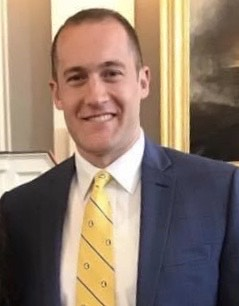
Al‑Sharaa’s transformation from jihadist commander to “statesman” follows a well-established pattern among political Islamists who, having learned hard lessons from the failures of al‑Qaeda, ISIS and the Taliban, now recognize that violent fundamentalism may win territory but cannot sustain legitimacy. Al‑Sharaa has internalized and integrated the lessons from those failures. His shift from fatigues and turban to Western attire is not a repudiation of ideology—it is an adaptation of method.
By recasting himself as a moderate pragmatist, al‑Sharaa is pursuing the long game. He has studied how the Taliban’s rigid theocracy triggered global isolation and how ISIS’s savagery ensured its own annihilation. In contrast, al-Sharaa’s goal is to secure international buoyancy through persuading the West that engagement with him is the least bad option.
His rhetoric of pluralism and reconciliation is designed to appeal to Western sensibilities. But his ideological foundation remains intact: an Islamist worldview that envisions governance through divine mandate and religious orthodoxy. His pragmatism does not dilute that vision—it only delays its full expression until power is sufficiently consolidated.
The Fallacy of Ideological Abandonment
The author attempts to distance al‑Sharaa from militant Islamism with the claim that “truly committed Islamist militants generally don’t abandon their entire ideology.” Ironically, this very poignant insight is an indictment of al-Sharaa, not an exoneration. Al-Sharaa remains a committed Islamist who has not abandoned his ideology—he has merely refined his approach.
The idea that al-Sharaa represents a “new Middle East” ignores the pattern of Islamist regimes repackaging their governance for international consumption. History offers numerous precedents. Egypt’s Muslim Brotherhood, Tunisia’s former al-Nahda Party, and Turkey’s Justice and Development Party all understand the power of incrementalism, and have demonstrated that Islamists can adopt democratic reforms, build institutions, and soften their rhetoric while maintaining the long‑term objective of Islamizing the state. Their strategy has never been the wholesale rejection of political Islam, but its incremental normalization.
Al‑Sharaa belongs to this lineage. His softened aesthetic—groomed beard, Western dress, and willingness to appear publicly in the presence of women—is visual diplomacy designed to put the international community at ease.
Pragmatism as a Means, Not an End
Al‑Sharaa’s pragmatism is utilitarian, not philosophical. His “inclusive governance” and “technocratic modernization” are instruments of consolidation, not ends in themselves. Having witnessed the swift collapse of ideologically rigid movements, he recognizes that the fight for international legitimacy is the new jihad.
Recent events in Syria underscore this reality. While al‑Sharaa publicly speaks of national unity, forces loyal to his government have conducted massacres against Christian, Alawite, and Druze civilians. The pattern of denial, obfuscation, and blame‑shifting on to “unruly militias” mimics the Assad regime’s playbook. Whether these atrocities stem from direct orders or turning a blind eye, the result is the same: minorities remain terrorized and impunity reigns. A government that cannot—or will not—control its forces cannot be treated as a trustworthy guarantor of minority protection.
Moreover, al‑Sharaa’s new legislature—hailed by some as democratic—systematically excludes religious and ethnic minorities from meaningful participation. In Syria’s recent parliamentary election, one-third of the 210 seats were reserved for appointment by al-Sharaa himself. The legislative body is conspicuously devoid of Alawites, and only includes one Christian. This façade of inclusion merely conceals Sunni Islamist supremacy beneath civilian veneer.
Al‑Sharaa’s apparent transformation reflects a longstanding tradition in political Islam, taqiyya—religiously sanctioned duplicity intended to cloak long‑term religious objectives in pragmatic diplomacy. This is not a novel phenomenon. Throughout history, such maneuvering has been used by Islamist movements to secure time, resources, and strategic advantage.
His apparent moderation merely represents a strategic pause—best expressed through the jihadi principle of sabr, patient determination—not a spiritual transformation.
Attempting to rehabilitate al-Sharaa risks legitimizing not only him, but the broader idea that militant Islamism can be whitewashed so easily.
Engagement Without Illusion
To be clear, Syria’s reintegration into the international fold is not inherently misguided. Total diplomatic disengagement and isolation would just as assuredly create a vacuum that extremists would eagerly exploit. But the pendulum must not swing to the opposite extreme. Diplomacy is not a binary. Engagement must be a strategically structured tool to establish guardrails for behavior and mechanisms for accountability. It must also serve broader U.S. strategic interests—chief among them, preventing Syria from falling deeper into the geopolitical orbit of Iran, Russia, and China, all of which stand to benefit from an Islamist client state on the Mediterranean.
The U.S. must predicate any recognition of the Syrian Transitional Government on verifiable guarantees of minority protection, criminal accountability, religious freedom, and the enshrinement of equal citizenship under a civil, nonsectarian constitution.
Ahmad al‑Sharaa’s Syria represents neither the dawn of liberal democracy nor the triumph of pragmatism. It remains an Islamist state in the making, though one that has been rebranded to speak the language of democracy to achieve the goals of theocracy.
American diplomacy with Syria must therefore remain cautious, principled, transactional, and conditional. The world must look beyond the suit and tie. Al‑Sharaa may have traded his fatigues for formalwear, but his worldview remains the same. The danger lies not in what he says, but in what he still believes.