“The only thing the Kremlin is interested in exporting these days is chaos.” – UK Prime Minister Jonathan Lancaster in Daniel Silva’s Ransom
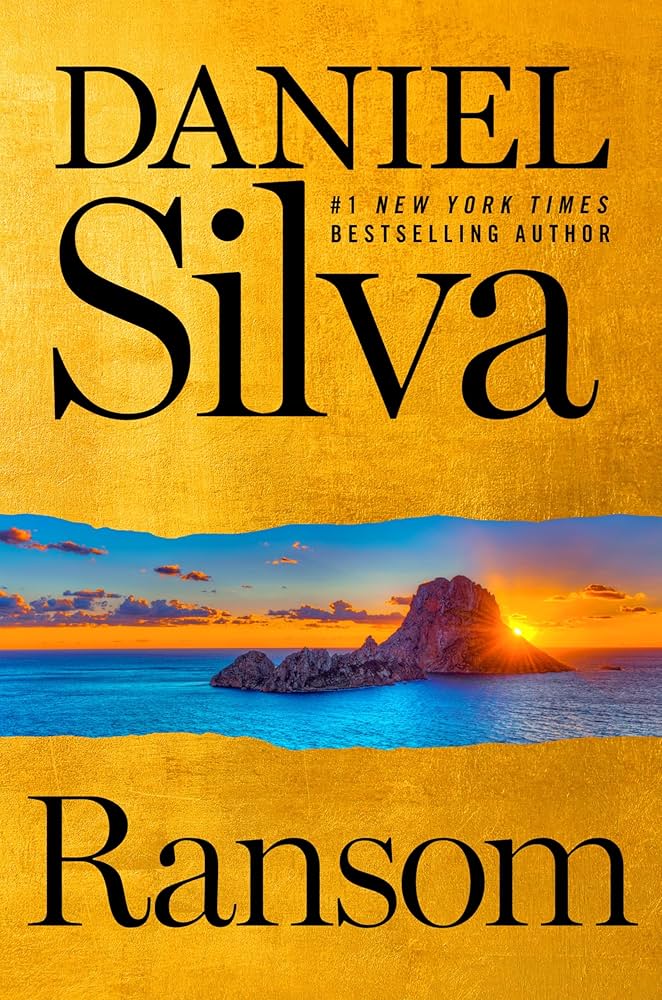
Perhaps the most anticipated book of the summer season is the latest adventure of master spy and artist Gabriel Allon. Now in its twenty-sixth iteration, Daniel Silva’s series has taken Allon from a secret operative defending his native Israel against Islamist terrorists to international protector of prime ministers and popes. In Ransom Allon once again operates in the gray zone, facing a network of Russian spies bent on destabilizing Western Europe.
This is not a formal book review, so there need be no disclaimer of a spoiler alert. Ransom is not about a traditional international conflict, so it begs the question: does just war thinking apply in unconventional conflict, in the world of spies and espionage, “in the shadows?”
As Ransom unfolds, the reader is presented with today’s world of Russian drones buzzing international airports, Russian assassination of political opponents by exposure to nerve agents, Russian cyber-attacks and disinformation campaigns, and Russia’s relentless war on Ukraine. Gabriel Allon asserts that this is nothing new:
“Our Russian friends are doing the same things they have been doing for the past 20 years: subversion, sabotage, election interference, and sophisticated information operations, all to sow discord and undermine the will of the West.” Allon goes on to say, “the KGB used to call it ‘active measures’” but today we call it “hybrid warfare.”
Does just war thinking apply in these instances? We typically apply just war thinking to cases where we anticipate or observe a formal declaration of war: legitimate authorities declaring the justice of their cause and the rightness of their intentions when the use of force is clearly a reasonable last resort. Hybrid warfare, or gray zone operations, do not seem to fit this framework.
Does the just war tradition falter because of the informality and unconventionality of hybrid warfare? The answer, of course, is no. Indeed, the just war framework stands up very well by providing legitimate authorities in democratic societies a diagnosis of the situation and a starting point for making decisions.
First, hybrid warfare is warfare because it is the use of force or violence under, or directed by, government authority. It is an act of war any time a government, including rogue governments such as Havana, Pyongyang, or Tehran, instigates, incites, supports, coordinates, or cooperates in the use of force or violence, whether directly, through proxies, or by clandestine methods.
When such rogue governments initiate acts of harm, it is the moral and lawful duty of governments and the international community to defend the lives, livelihoods, and way of life of their citizenry.
National security officials, and especially academicians safely far from the battlefield, must avoid the trap of throwing their hands up in the air and avoiding responsibility with limp excuses such as, “There is nothing we can do … the UN Security Council has not decided …” or, “There hasn’t been a formal declaration of war, so any action on our part will be illegal …” These are moral and strategic cop-outs.
It is the ethical responsibility of legitimate governing authorities to protect their publics and the international common good by making every good-faith attempt to deter, thwart, and appropriately respond to such ‘active measures.’ Moreover, the shadowy element of hybrid warfare should result in even closer collaboration among partners in terms of information sharing and collective action. Unfortunately, in the case of Russia’s constant undermining of Western societies and international order, the Western alliance does not seem to fully in sync.
Dan Silva’s Ransom is a fast-paced novel with a cast of return characters that his vast audience will enjoy. It is set in our own dangerous world of enemy governments, such as Russia, North Korea, and China, that actively seek to sow discord and undermine the will of the West. The reason that the reader knows that “all’s fair in [love and] war” is an evil lie is because our Western moral order is rooted in justice—just statecraft. May the good guys win in the real world and not just in our fiction.