


As AI grows more ubiquitous, lawmakers should look to the doctrine of “imago dei” to keep public policy moored to the needs of human beings as reflections of divinity
Emir PhillipsNovember 7, 2025

Without the libraries of mind necessary to sustain deep thought, built up over a lifetime of reading, we will never be able to stretch beyond our finitude to a properly-ordered understanding of God and man
Nadya WilliamsSeptember 8, 2025

Without the widespread ability to cogently express important ideas, none of the most important leaders of the last few hundred years would ever have been so influential
Nadya WilliamsJuly 31, 2025

The U.S. must lead in AI development to ensure the technology’s future upholds American values of free expression and not the CCP’s censorship and propaganda
Ed TarnowskiApril 11, 2025
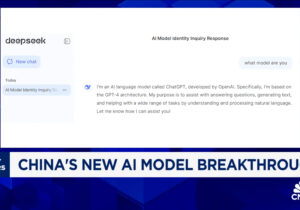
The recent release of DeepSeek, a Chinese AI competitor to rival America’s own large language models (LLMs), has shocked many. But what does it mean for long-term Sino-US competition?
Joseph O. ChapaFebruary 3, 2025

Despite much chatter about the applications of AI to military hardware, three common myths about AI in national security still need correcting
Joseph O. ChapaJanuary 16, 2025

Though the idea of always having a human “in the loop” with autonomous weapons sounds reassuring, this framing actually obscures more than it clarifies.
Joseph O. ChapaNovember 25, 2024
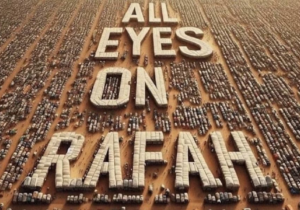
Social media has become increasingly influential, illustrating how competing narratives we encounter about the world are processed.
William RobertsJune 25, 2024

The war in Ukraine is proving to be a tragic proving ground for trends that will almost certainly be replicated in other twenty-first-century warfare. Decentralized decision-making, the targeting of population centers, tactical speed in decision-making, the rise of artificial intelligence, vital intelligence sharing, and the strategic impact of moral and spiritual injury demonstrate the boundaries for future combat.
Timothy MallardMay 9, 2022