
On April 12, Viktor Orbán, Hungary’s prime minister since 2010, lost his bid for reelection. To many in the United States, Orbán had become known for corruption and his pro-Putin stance within the European Union, often complicating efforts to deliver unified support to Ukraine.
But beyond Hungary’s role in European politics, a curious phenomenon unfolded over the past several years: the country came to be seen by some as a bastion of conservative thought in Europe, hosting American journalists and academics eager to study the “Hungarian model.”
How did a small Central European state, with an economy roughly the size of Oklahoma’s, come to symbolize a broader conservative movement in the West? And why did so many American conservatives make pilgrimages to a place most Americans could not locate on a map?
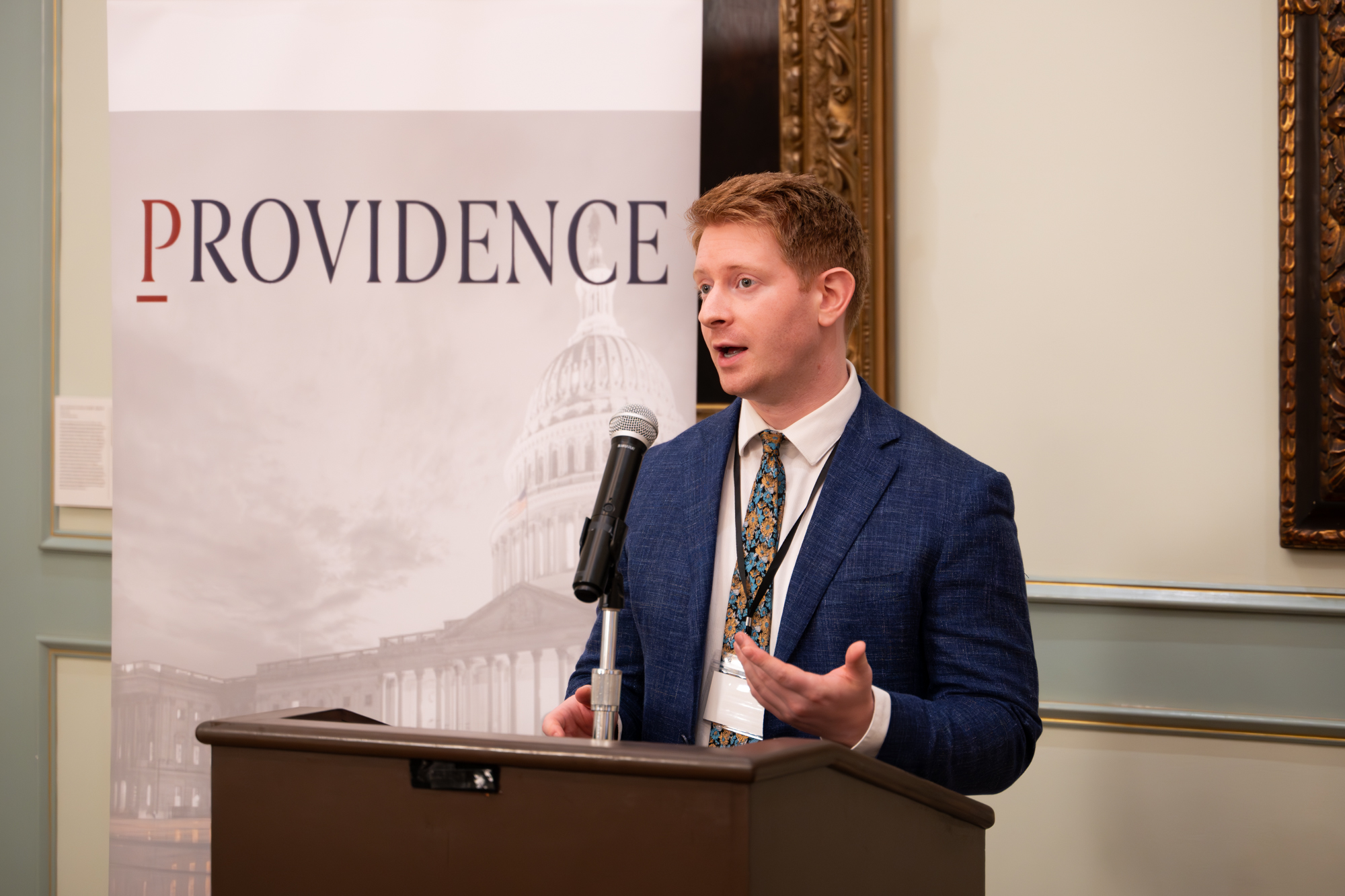
Providence Managing Editor James Diddams is joined by James Patterson, associate professor of public affairs at the Institute for American Civics at the University of Tennessee, Knoxville, to discuss the rise and fall of Hungary as a model for the postliberal Christian right.
Articles referenced:
James Patterson. “The Grand Budapest Cartel.” Providence Magazine, April 15, 2026.
“Is There a Catholic Plot to Overthrow the American Founding?” The Jeremy Boreing Show. April 10, 2026.